Burnt Out Without Doing Anything: The ADHD Burnout Nobody Talks About

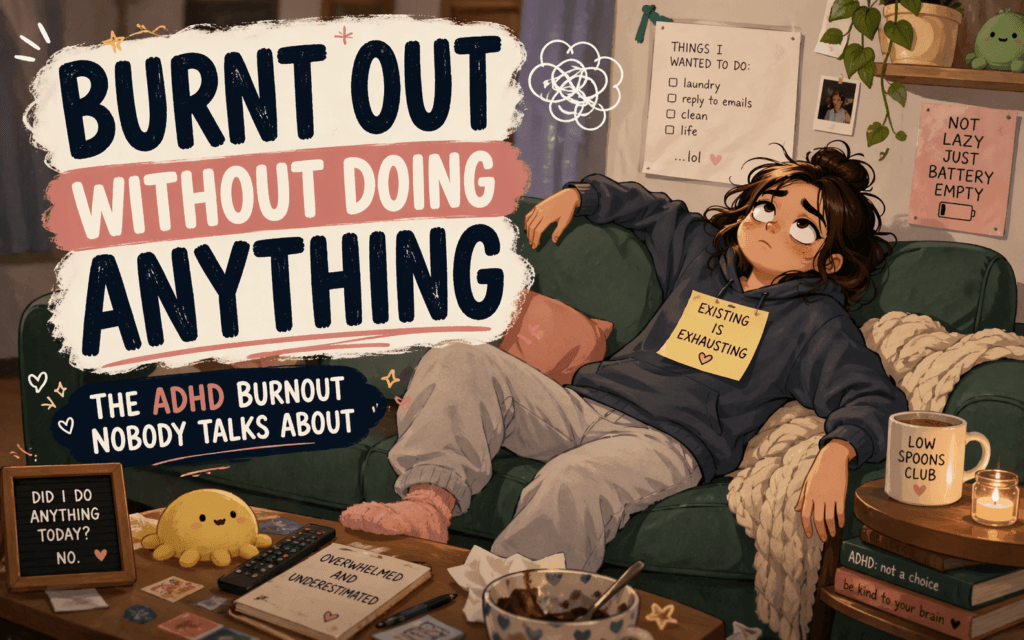
You're exhausted. Not tired in the way you get after a long day of work. Exhausted in a deeper way, wrung out, in a way that doesn't match what you actually did. Maybe you didn't do much at all today. And somehow you're still running on empty.
This is ADHD burnout. It's not the same as general burnout, and the distinction matters.
What's Different About ADHD Burnout
Standard burnout comes from doing too much for too long. The body and mind get depleted through output: overwork, chronic stress, insufficient rest.
ADHD burnout can come from all of those things. But it also comes from something that rarely gets acknowledged: the constant effort of managing an ADHD brain in a world that wasn't designed for it.
Every day involves a baseline level of executive effort that neurotypical people don't have to pay. Remembering what you were doing before you got distracted. Tracking time when time doesn't feel real. Managing the emotional intensity that comes with rejection-sensitive dysphoria. Appearing functional in environments that require sustained attention you can only manufacture through significant conscious effort.
This isn't output. It's overhead. And it depletes the same reserves.
The Masking Tax
Masking is the process of consciously or unconsciously suppressing ADHD behaviors to fit into expected norms. Sitting still when your body wants to move. Appearing to listen when your brain has jumped three topics ahead. Looking engaged in a meeting when every part of your attention system is trying to exit the room.
Masking works, in the short term. It's what allows many people with ADHD to appear "functional" or "high-performing" in environments that would otherwise flag their struggles. But it has a cost.
The energy you spend managing how you appear is energy you don't have for actual work, actual rest, or actual connection. And unlike the energy you spend on tasks, the energy spent masking is invisible. There's nothing to show for it, which makes it easy to discount, including to yourself.
You had a normal day. Why are you this tired? Because a normal day, for you, requires a level of active management that a normal day doesn't require for most people.
Object Impermanence and Mental Load
ADHD often comes with a reduced sense of "object permanence" for tasks, people, and plans. Things that aren't currently in front of you don't feel fully real. Out of sight becomes genuinely something like out of mind, not through negligence, but through how the ADHD memory system works.
To compensate, many people with ADHD develop elaborate tracking systems: lists, reminders, calendar alerts, sticky notes, mental checklists that run in the background. These systems work. They're also exhausting to maintain.
The mental load of tracking everything you're afraid to forget, of constantly monitoring your own monitoring systems, is real cognitive work. It's happening whether or not you're "doing anything." It's part of why you can have a quiet day and still feel spent.
The invisible labor of ADHD management doesn't show up in productivity metrics. You can be genuinely exhausted from a day of staying organized and on-task, even if you only completed two things. The effort of managing the process is often greater than the effort of the tasks themselves.
Emotional Dysregulation Is Work
ADHD and emotional dysregulation often travel together. The intensity of emotional responses, the difficulty recovering from setbacks, sensitivity to perceived criticism (rejection-sensitive dysphoria), and the chronic low-grade anxiety that many ADHD people carry all require energy to manage.
You spend effort throughout the day containing reactions that feel disproportionate. Or you don't contain them and spend energy managing the fallout. Either way, the emotional landscape of ADHD adds to the depletion in ways that don't appear on any to-do list.
ADHD Burnout vs. Depression
ADHD burnout and depression share some surface features: low energy, reduced motivation, difficulty feeling pleasure in things that used to be enjoyable, social withdrawal. They can also co-occur, which adds complexity.
One distinction is reversibility. ADHD burnout tends to respond to genuine rest and reduced demand. When the source of depletion is removed or reduced, recovery is often possible. Depression tends to persist regardless of external conditions.
Another distinction is the presence of a trigger. ADHD burnout often has a detectable cause or accumulation. Depression can arrive without any clear external cause.
If you're not sure which you're dealing with, speaking with a clinician who understands ADHD is worth the effort. Both are real. Both are treatable. The paths out are different.
Recovery Looks Different Than Just Resting
When burned out, the instinct is to rest. But for ADHD burnout, rest alone doesn't always work, because the depletion is specific. The executive function system is overloaded. Lying on the couch watching TV can actually maintain the cognitive demand, because attention management is still required.
What tends to help more: genuinely low-demand activity. Time in nature, physical movement, absorbing creative work with no performance expectations, social connection that doesn't require you to perform or manage yourself.
It also helps to actually reduce demand, not just rest within the existing demand structure. Saying no to things. Simplifying your tracking systems. Accepting that some things won't get done this week. These feel impossible to ADHD brains that already feel behind. But recovery often requires them.
The Thing Nobody Says Out Loud
If you're burned out from a day of doing almost nothing visible, it's not because you're weak. It's because you were doing something all day: managing yourself, managing your environment, managing your attention, managing your reactions.
That work is real. It just doesn't have a column in the spreadsheet.
Acknowledging that the work is real is the beginning of recovering from burnout properly, instead of pushing through until the system crashes completely.
Rate this article
Was this a useful hit?